Society and Culture at Stella

was created and is updated by Katie Price and students at Stella Maris College, Manly, NSW.
Showing posts with label Technology. Show all posts

Monday, 6 August 2012

Film Review - 'Never Let Me Go'

Brae reviewed the film 'Never Let me Go' in relation to some of the Society and Culture Concepts:

Time - Only a certain amount of time to live.
Power - The medical breakthrough that occurred changed lives for younger people, however elder people got an advantage.
Authority -  People are under constant watch.

 The film begins with onscreen captions explaining that a medical breakthrough in 1952 has permitted the human lifespan to be extended beyond 100 years.
 The first section of the film depicts the young Kathy, along with her friends Tommy and Ruth, spending their childhood at Hailsham, a seemingly idyllic English boarding school.
It is revealed that the film is set in an alternate twentieth century. One of the teachers is fired after telling the pupils of their fate: they exist to provide donor organs for transplants. They will be nurtured to adult age at which time they will be available for "selection."

Monday, 23 April 2012

A real man...

Thanks to Camille for this excellent discussion:

Are you a real man? Do you know someone who is a ‘real’ man?
1.       Are they chivalrous and respectful? That’s pretty ‘manly.’
OR
2.       Are they disrespectful to women and constantly put them down? That seems to be pretty ‘manly’ these days too.

Herein lies our paradox.

Jackson Katz’ book, The Macho Paradox, profoundly challenges the definition of manhood. Are men real men when violence against women is involved physically and verbally? Are men programmed to be violent or are people naturally violent?

Society and culture are highlighted repeatedly in this book. Concepts of gender and power are major features, as men fearing women constantly slam women to defend their ‘masculinity.’ Are men brought up this way, passed down by enculturation? Has violence against women accelerated along with the technology that allows access to the 10,000 porn videos released in the U.S.A every year? This pattern has led people to evaluate continuity and change that come with gender violence and how societies can prevent it. 
From Eminem to high school sex scandals, this type of violence concerns every individual and influences them to make decisions. This is not a ‘women’s issue’, it is something that men play a role in too and it should be acknowledged. True manhood most certainly shouldn’t involve harming of another human being. Jackson Katz’ discusses hundreds of factors more on this topic from personal experiences to quantitative data. He also acknowledges the book called the ‘Cinderella complex’, where it claims that very independent women still desire to be protected by a male. The gender stereotypes are overwhelming and cease to end! The Macho Paradox proves to be as complex and puzzling as society and culture itself.
See the powerpoint accompanying this here.

Tuesday, 3 April 2012

Race in TV

Thanks to Marianne for this review of current issues of race and culture in TV media.


TVs white Australia policyThe article relates to society and culture concepts because it highlights cultural stereotypes and the power the media has to dictate what is put on television; people are highly influenced by what we see in the media. This also links to continuity and change because Australia has become a more multicultural country in the last 20 years, so we should therefore portray this image on TV. However, the media still perceives the Australian audience to be intolerant to other races and believes we would rather see white people on TV.
Major television networks are accused of TV racism as it is believed that there are few roles on commercial television for people from Australia’s ethnic mix. Soap operas such as ‘Packed to the Rafters’ and ‘Home and Away’ are being criticized for ‘Racial Tokenism’ as well as reality game shows and news/panel/chat shows which are being described as very anglo-centric. Multicultural Arts Australia also say that when there is racial diversity it usually depicts cultural stereotypes which is being labelled ‘Colour Blind Casting’. A lot of ethnic actors are portrayed as the villain, eg  Middle Eastern actors are portrayed as drug dealers and‘Wog criminals.’
 TV networks and advertisers argue that they are worried that white Australians will tune out if there is more ethnic mix in the media, despite 2009 census revealing that 44% of Australians are born overseas or have at least one foreign born parent. Hence, Australia would be more accepting of other cultures and more ethnic groups might watch shows if they were being represented on television. A professor of sociology also claims that media are worried that they may portray ethnic races in a way that people may deem as offensive and so they stick to the white, ‘mainstream model’.
Read the full article from The Vine.

Tuesday, 20 March 2012

'Blue bra girl' rallies Egypt's women vs. oppression

Thank you to Sarah for this write up on a recent relevant news issue - see bold for links to S&C concepts!

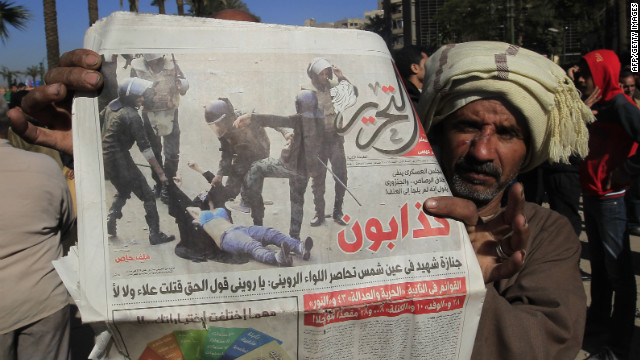
A newspaper photo shows Egyptian security forces beating a female demonstrator during clashes in Cairo on Sunday.
A newspaper photo shows Egyptian security forces beating a female demonstrator during clashes in Cairo on Sunday.Within every country all over the world there is gender inequality, whether it be the workplace, home, government etc. Recently in post-revolution Egypt, gender inequality has been a big issue, many people have been beginning to speak out and protest about woman’s rights and how they are severely lacking in Egypt.  Recently a protest was held in Cairo’s Tahrir Square, where thousands of men and women gathered to demonstrate their feelings towards the inequality.

“When thousands of women take to the streets and demand they be listened to then this is a historic event (CHANGE!). The all male military dictatorship are trying to drive them off the streets with brute force, killings and beatings. But not only this brutal rape and humiliations. The military after they took over power in February performed invasive, pseudo-medical 'virginity tests' on several women arrested after a demonstration in March. This was rape intended to intimidate all women. So is the stripping of women and the beating of women in the recent march. The video of the young women where she was stripped and beaten by all male soldiers makes things clear. When her clothes were pulled off she was shown to be wearing a blue bra. She is now referred to as the "blue bra girl" and "blue bra" is being used on twitter to spread the word asking for support for the movement.”

The people are protesting against the pPesident Mubarak who has been in reign with his own regime for 30yrs. They have been influenced by the sucess of what happened in Tunisia. They want more freedom, more jobs and food prices to go down. The internet has been shut down because it is a way of communicating and protestors can gain support etc in this way. If you are shut down from communications you are more likely to stay at home and do nothing. Mobile phones are not working either. They have also closed down international news channels on tv so the locals do not know what is happening.

Monday, 19 March 2012

Kony 2012 - People Power???

POWER and AUTHORITY: Two key concepts in the Society and Culture course. The Kony 2012 campaign and 'craze' shows big changes in who has power and who influences authority.
A few things to consider:

- Does Kony have power or authority? - or neither? - or both?
- If so, WHY does Kony have power?
- Do Governments (African countries governments, American government, Australian government... and more!) have any power or authority over Kony?
- What sort of power and/or authority does the public have? In Uganda/Africa, in the USA, in Australia, around the world?
- How has the balance of power and authority changed over the last month? To who, from who?
- How has technology influenced this? Do Social Networking sites have any power or authority?

I could go on....

- If the public does have some power - then that includes you... do you feel in a position of power? Do you WANT that power?!!!

Please post more interesting questions in the comments box below!!! Or even your feedback and thoughts on any responses or answers would be even better!!!! :)

Sunday, 18 March 2012

Kony 2012 - the video, the social networks.

KONY 2012: How Social Media Fueled the Most Viral Video of All Time
KONY 2012 took the social web by storm last week, as a 30-minute documentary seeking to arrest LRA leader Joseph Kony was viewed online nearly 100 million times.
The Pew Internet and American Life Project investigated how KONY 2012 became the most viral video of all time.
The key, Pew found, was 18 to 29-year-olds sharing links on Twitter and Facebook. While initially 77% of Twitter discussions were positive, the tone shifted as criticisms of the non-profit behind the film, Invisible Children, began to circulate.

Source: Yahoo News

Maybe this is true: Where did you learn about KONY 2012? Are Twitter and Facebook your go-to sources for current events? I am unfortunately out of that 18-29 age bracket and the first place I learnt about it was from YOU- the students, in lessons at school! And then later on the television news. Maybe this is just one small piece of evidence to back up how information and the power of the media is shifting through time.


In addition, our easy access to information today, i.e. via the internet means that we can easily adn quickly find additional information on something that interests us. Within 24 hours the campaign was initially supported and then questioned as people looked more closely at the issues and background to the Kony 2012 campaign and the Invisible Children Organisation.

Or... is this one aspect of our culture today? That as soon as someone or something becomes successful, there are underlying desires to bring that someone or something down? ... 'Tall poppy syndrome?'....???